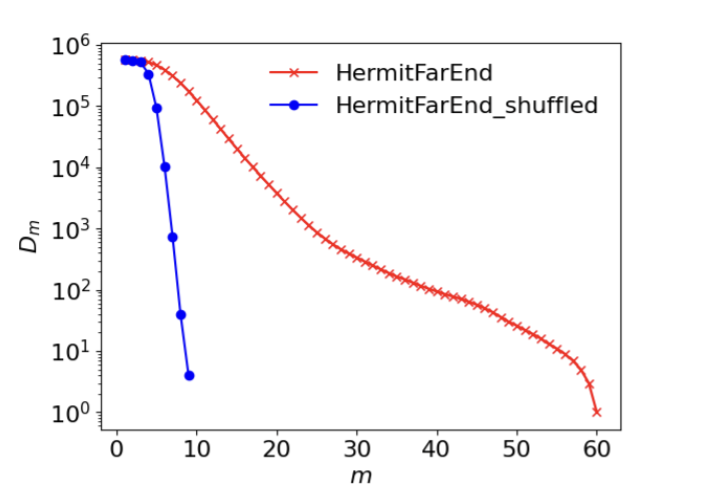
Evaluating whether large language models (LLMs) capture the structure of natural language beyond local fluency remains an open challenge. Existing evaluation methods, largely based on task performance or short-context behavior, provide limited insight into the long-range statistical organization of generated text. We propose a complementary evaluation framework based on repeated subsequences. By analyzing their distribution across scales and relating it to higher-order Rényi entropies, we probe how texts reuse previously established structure under finite-length conditions.
Experiments on human-written texts and length-matched GPT-generated texts show that, while power-law models can describe restricted ranges of block length, the observed entropy growth is often equally or better characterized by logarithmic–power forms. Across datasets, natural language exhibits stable entropy-growth patterns over accessible ranges, with consistent average behavior despite variability across individual texts. In contrast, GPT-generated texts show systematic and statistically significant shifts in estimated exponents with model size. These results demonstrate that repeated-subsequence entropy provides a quantitative structural diagnostic that reveals systematic differences in long-range organization, distinguishing natural language from state-of-the-art LLM outputs beyond surface-level fluency.
References
Kumiko Tanaka-Ishii. Repeated Sequences Reveal Gaps between Large Language Models and Natural Language. Accepted to the 64th Annual Meeting of the Association for Computational Linguistics (ACL 2026), to appear in July 2026.